
Does Faulty Electrical Outlets Cause High Electric Bills?

Imagine opening your electric bill and seeing a charge that makes your jaw drop. Your first thought might be, “What’s going on? Am I leaving the lights on too much?”
But what if the real culprit was something more subtle, like a faulty electrical outlet? It might sound surprising, but bad outlets could be silently draining your energy—and your wallet.
Also Read: My WirelessCoupons .com: Wireless Savings and Tech News
Let’s explore the connection between faulty outlets and high electric bills, uncover the science, and figure out what you can do about it.
What Exactly Is a Faulty Electrical Outlet?
Before we dive deeper, let’s clarify what “faulty” means. A faulty outlet is one that’s not working as it should. It might:
- Overheat.
- Deliver inconsistent power.
- Show signs of physical damage like cracks or burn marks.
Some outlets may even look fine on the surface but have internal wiring issues.
Also Read: Hanover Tomato Festival
Can Faulty Outlets Cause High Electric Bills?
Short answer: Yes, but not directly.
Here’s why. A faulty outlet can lead to several energy-draining issues:
- Energy Leaks:
Damaged outlets can cause appliances to draw power unevenly. This creates “phantom loads,” where electricity is wasted even when devices aren’t in use.
- Example: If a phone charger is plugged into a faulty outlet, it might consume more power than normal.
- Overheating:
Faulty wiring or loose connections can cause overheating. This extra heat wastes energy and increases your electricity usage. - Short Circuits:
Some faulty outlets cause power surges or short circuits. These not only waste energy but can also damage your appliances.
The Real-Life Impact: What the Numbers Say
A study by the U.S. Department of Energy (DOE) found that phantom power—electricity consumed by idle devices—accounts for up to 10% of residential energy bills. Faulty outlets can amplify this problem.
Let’s break it down:
- A typical U.S. household spends $1,200 annually on electricity (source: Energy Information Administration).
- 10% of that is $120 wasted on phantom power.
- Faulty outlets can increase this waste by an additional 5–10%, meaning you could lose another $60–$120 yearly.
That’s up to $240 per year just vanishing into thin air!
How to Spot a Faulty Outlet
The tricky part is, not all faulty outlets are obvious. But there are some telltale signs:
1. Warm or Hot Outlets
If your outlet feels warm to the touch, that’s a red flag. Heat usually means electrical resistance, which wastes energy.
2. Flickering Lights
Plugging a lamp into the outlet and noticing flickering? It might not be the bulb—it could be the outlet.
3. Buzzing or Crackling Sounds
A properly functioning outlet should be silent. If you hear buzzing, it’s likely an internal wiring issue.
4. Discolored or Burn Marks
This is a sure sign of overheating or sparking.
Steps to Diagnose and Fix Faulty Outlets
Now that you know the signs, here’s what you can do:
Step 1: Test with Multiple Devices
Plug in different appliances. If they don’t work consistently, the outlet might be the issue.
Step 2: Use a Voltage Tester
A voltage tester can measure the electrical output of your outlet. If the reading is unstable, it’s likely faulty.
Step 3: Inspect the Wiring (If You’re Comfortable)
Turn off the breaker and carefully unscrew the outlet cover. Look for loose wires or signs of damage.
Step 4: Call a Professional
If you suspect a major problem, don’t DIY it. Faulty outlets can pose serious safety risks, including fires.
How Faulty Outlets Compare to Other Energy Drainers
Faulty outlets aren’t the only thing driving up your bills. Here’s how they stack up:
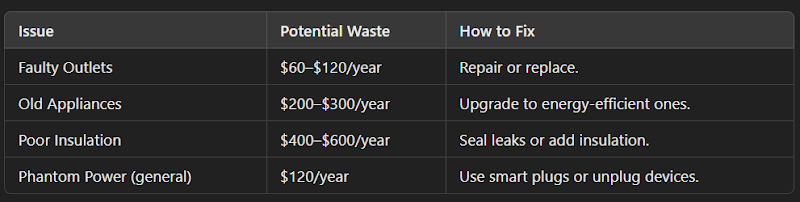
Many homeowners are surprised to learn that several other factors could be silently consuming energy. Let’s dive deeper into how faulty outlets compare to other common culprits.
1. Faulty Outlets
While faulty outlets might seem minor, the impact on your energy bills can add up over time. Outlets with loose wiring, damaged connections, or overheating problems often result in energy leaks and inefficiencies. For instance, if an outlet doesn’t supply power efficiently, your appliances may use more energy to function properly—or worse, the outlet may create a “phantom load” that wastes power even when the appliance isn’t in use. Although the estimated waste might be between $60 and $120 annually, the safety risks associated with faulty outlets, such as electrical fires, make them a top priority to address.
2. Old or Inefficient Appliances
Old appliances can be a much bigger drain on your energy bills. Think about that ancient fridge in your garage or the outdated air conditioning unit you’ve been putting off replacing. These appliances lack the energy-efficient technologies of modern models and often consume significantly more electricity than necessary. For example, a refrigerator that’s 10–15 years old can use up to 50% more energy than an ENERGY STAR-certified model. The result? An extra $200–$300 added to your annual electricity costs. Upgrading to newer, energy-efficient appliances might involve an upfront cost, but the long-term savings make it a smart investment.
3. Poor Insulation
Insufficient insulation in your home is another massive energy drainer, particularly during extreme weather. Without proper insulation, your heating and cooling systems work overtime to maintain a comfortable temperature. The result is skyrocketing energy costs, with the U.S. Department of Energy estimating that poor insulation can increase heating and cooling expenses by as much as 30%. For a typical household, this could mean an extra $400–$600 a year. Faulty outlets might waste electricity locally, but poor insulation impacts your entire home. Sealing cracks, upgrading insulation, and investing in energy-efficient windows can help tackle this costly issue.
4. Phantom Power from Idle Devices
Phantom power, also known as standby power, refers to the energy used by devices that remain plugged in but aren’t actively being used. Common culprits include phone chargers, gaming consoles, and kitchen appliances with digital displays. While each device may only draw a small amount of power, the cumulative effect can account for up to 10% of your total electricity usage, costing around $120 per year. Faulty outlets can exacerbate phantom power issues by amplifying the energy drain, making it doubly important to unplug unused devices or use smart plugs to cut off power when it’s not needed.
5. Inefficient Lighting
Lighting might seem like a small factor, but traditional incandescent bulbs consume far more energy than modern LED or CFL alternatives. A single 60-watt incandescent bulb used for 5 hours a day can cost about $25 annually. Multiply that by the number of bulbs in your home, and it’s easy to see how lighting inefficiencies can add hundreds of dollars to your yearly energy bill. While faulty outlets waste energy at specific points, inefficient lighting impacts every room of your house. Switching to LED bulbs can save up to 75% of the energy used by traditional lighting.
Faulty outlets may not be the biggest contributors to high electric bills, but they shouldn’t be overlooked. Combined with other energy-draining factors like old appliances, poor insulation, phantom power, and inefficient lighting, they contribute to a broader pattern of waste.
Addressing each issue proactively—whether through upgrades, repairs, or behavioral changes—can significantly lower your electricity costs and improve energy efficiency in your home.
Preventing Faulty Outlet Problems
Prevention is always cheaper than repair. Here’s how to keep your outlets in top shape:
1. Schedule Regular Inspections
Electrician aurora co can catch wiring problems before they escalate. Annual checks are ideal.
2. Avoid Overloading Outlets
Using a single outlet for multiple high-power devices can strain the wiring.
3. Upgrade to Modern Outlets
Smart outlets and GFCI (Ground Fault Circuit Interrupter) outlets are safer and more energy-efficient.
The Hidden Dangers of Ignoring Faulty Outlets
It’s not just about higher bills. Faulty outlets can lead to:
- Electrical Fires: The National Fire Protection Association (NFPA) reports that electrical malfunctions cause 13% of home fires annually.
- Damaged Appliances: Faulty outlets can shorten the lifespan of your devices.
- Health Risks: Overheating outlets can release harmful fumes from melted plastic.
FAQs About Faulty Electrical Outlets
1. How much does it cost to fix a faulty outlet?
The average cost ranges from $75–$200 per outlet, depending on the complexity.
2. Can I fix a faulty outlet myself?
Simple fixes, like replacing a faceplate, are fine for DIY. But anything involving wiring should be left to a licensed electrician.
3. How often should outlets be inspected?
At least once every 3–5 years, or sooner if you notice issues.
Final Thoughts
Faulty electrical outlets might not seem like a big deal at first glance. But they can quietly add to your electric bill, damage your appliances, and even put your home at risk.
The good news? With a little attention and some preventive care, you can avoid unnecessary costs and keep your home safe.
So next time you see a spike in your electric bill, don’t just assume it’s your habits. Check your outlets—they might be trying to tell you something.


