
Rwanda Uganda Solo Travel and Gorilla Trek Guide
There is a particular kind of courage required to book a one-way flight to East Africa with nothing but a backpack, a valid passport, and a dream of standing a few meters from a silverback gorilla. That is exactly what I did last dry season, setting off on a solo journey that combined Rwanda Gorilla Trekking in the misty heights of Volcanoes National Park with a self-drive adventure across the rolling hills of Uganda. What follows is an account of two weeks that reshaped how I think about travel, independence, and the raw beauty of the African wilderness.
Also Read: Why Oceanfront Vacations Rule 2024: Top Coastal Escapes
Landing in Kigali: The Gateway to Volcanoes National Park
My journey began in Kigali, Rwanda’s spotlessly clean capital, a city that immediately dismantled every outdated stereotype I carried about African cities. Solo travelers quickly discover that Rwanda is one of the safest countries on the continent, and Kigali’s smooth roads, organized taxis, and friendly locals made settling in effortless. After a day of acclimatizing, sampling local Rwandan coffee, and wandering through the Kigali Genocide Memorial to understand the country’s remarkable story of resilience, I set off north toward Musanze, the small town that serves as the launch pad for Rwanda Gorilla Trekking expeditions.
The drive from Kigali to Musanze takes roughly two to three hours along excellent tarmac roads, winding through terraced hillsides dotted with banana plantations and volcanic peaks piercing the clouds. This is the famous “Land of a Thousand Hills,” and every bend in the road reveals another postcard view. By late afternoon, the five volcanoes of the Virunga Massif emerged on the horizon, and I knew I had arrived at the doorstep of one of the greatest wildlife encounters on Earth.
The Gorilla Trek: A Solo Traveler’s Rite of Passage
Nothing quite prepares you for the moment you enter Volcanoes National Park. I had secured my gorilla trekking permit months in advance through the Rwanda Development Board, since permits are notoriously limited and sell out fast during peak season. As of 2026, a gorilla permit in Rwanda costs USD 1,500 per person, covering park entry, ranger guides, and a full hour with a habituated gorilla family. It is a premium price tag, and solo travelers on a budget often hesitate, but I quickly learned this fee funds anti-poaching patrols, veterinary care, and community projects that keep both the gorillas and neighboring villages thriving.
The morning briefing at park headquarters in Kinigi was electric with anticipation. Rangers assessed each traveler’s fitness level before assigning trekking groups to specific gorilla families, of which there are twelve habituated groups spread across the park. Traveling solo meant I was placed with a small international group, and within minutes I had made friends from three different continents, all bonded by nervous excitement.
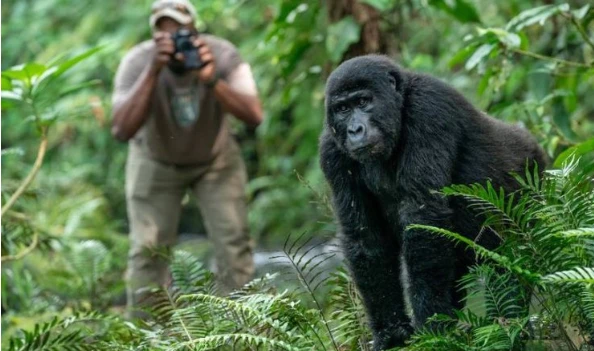
The trek itself is not for the faint-hearted. We climbed through dense bamboo forest, volcanic mud sucking at our boots, following trackers who had located the gorilla family’s fresh trail since dawn. After nearly two hours of climbing, our guide raised a fist, and the forest fell silent. Then, through a curtain of vines, I saw them: a family of mountain gorillas, utterly unbothered by our presence, a young one tumbling playfully while the silverback surveyed his domain with quiet authority. The hour that followed remains, without exaggeration, the most profound wildlife experience of my life. Solo travel has a way of intensifying these moments; there is no one to distract you, no conversation to fill the silence, just you and the gorillas in their misty mountain home.
Crossing the Border: From Rwanda to Uganda
After two unforgettable days in Musanze, including a hike to Dian Fossey’s former research camp, I made my way toward the Cyanika border crossing into Uganda. Traveling solo across an international land border sounds daunting, but the process was remarkably smooth. Immigration officials on both sides were efficient, and within an hour I was standing in Kisoro, southwestern Uganda, ready to begin the second half of my adventure: a self-drive safari.
This is where Car rental for self drive tours became the centerpiece of my trip. Renting a 4×4 vehicle, specifically a Toyota Land Cruiser fitted with a pop-up roof for game viewing, gave me total freedom to explore Uganda at my own pace. Several reputable car rental companies operate out of Kigali and Kampala, offering vehicles with unlimited mileage, comprehensive insurance, and 24-hour roadside assistance, which is essential when driving through Uganda’s more remote regions. As a solo traveler, I opted for a smaller 4×4 rather than a larger overland vehicle, which kept fuel costs manageable and made navigating narrow mountain roads far less stressful.
Self-driving in Uganda is an entirely different experience from being chauffeured on an organized tour. There is a particular joy in pulling over whenever you spot a troop of baboons crossing the road, or stopping at a roadside stall to buy fresh matoke and avocados from smiling vendors. The independence of a self-drive trip suits solo travelers perfectly: no group schedules to negotiate, no itinerary compromises, just open roads and instinct.
Budget Safaris in Uganda: Stretching Every Dollar
One of the biggest draws of combining Rwanda and Uganda on a single trip is cost. While Rwanda positions itself as a premium, low-volume tourism destination, Uganda has built its reputation on Budget safaris in Uganda that don’t sacrifice authenticity for affordability. A Uganda gorilla trekking permit for Bwindi Impenetrable National Park or Mgahinga Gorilla National Park costs roughly USD 800, nearly half the Rwandan price, making it an appealing option for travelers hoping to track gorillas twice on one journey without doubling their budget.
Accommodation in Uganda is similarly forgiving for solo travelers watching their spending. Community-run guesthouses and mid-range lodges near Bwindi and Queen Elizabeth National Park offer comfortable rooms with home-cooked meals for a fraction of the cost of Rwanda’s luxury volcano lodges. Camping is also widely available for those with rooftop tents or a willingness to rough it, and self-driving makes this flexibility possible. I found that budgeting around USD 60 to 100 per day, covering fuel, park fees, food, and modest accommodation, allowed for a comfortable yet economical two-week circuit through southwestern Uganda.
Public transport exists, but for a solo traveler wanting to reach remote parks like Bwindi, Queen Elizabeth, or Lake Mburo efficiently, a rental vehicle remains the smartest investment. Fuel is relatively affordable by regional standards, and the road network, while occasionally rough on unpaved stretches near the parks, is manageable in a well-maintained 4×4.
Self-Driving Through Uganda’s Wild Heart
From Kisoro, I drove north toward Bwindi Impenetrable National Park, home to nearly half of the world’s remaining mountain gorillas. The drive itself was an adventure, hairpin turns cut into steep hillsides, terraced tea plantations stretching toward the horizon, and children waving enthusiastically from roadside villages. Having my own vehicle meant I could stop wherever curiosity struck, whether that was a viewpoint over the Virunga volcanoes or a small coffee cooperative offering tastings.
After a second, equally magical gorilla trek in Bwindi’s ancient rainforest, I continued my self-drive route toward Queen Elizabeth National Park, famous for its tree-climbing lions and boat cruises along the Kazinga Channel teeming with hippos and elephants. Driving solo through the park’s open savanna, windows down, radio off, was a meditative experience that no organized tour could replicate. I set my own pace, lingered at watering holes, and camped under skies thick with stars.
The final leg of my journey took me toward Lake Mburo National Park before returning the rental vehicle in Kampala, Uganda’s bustling capital, where traffic chaos provided a fittingly energetic contrast to weeks of tranquil wilderness driving.
Practical Tips for Solo Travelers Considering This Route
For anyone inspired to attempt this journey alone, a few practical notes matter. First, book gorilla permits for both Rwanda Gorilla Trekking and Uganda well in advance, ideally three to six months ahead, since daily permits are strictly limited to protect the gorilla populations. Second, ensure your international driving permit is valid and confirm with your Car rental for self drive tours provider whether cross-border driving between Rwanda and Uganda is permitted, since some companies restrict vehicles to one country. Third, pack layered clothing; the misty highlands around Volcanoes National Park are considerably cooler than Uganda’s savanna regions.
Solo female and male travelers alike report feeling safe throughout both countries, though standard precautions apply, particularly around border crossings and after dark on rural roads. Travel insurance covering medical evacuation is non-negotiable given the remoteness of some trekking regions.
Final Reflections
Combining Rwanda Gorilla Trekking with a self-drive exploration of Uganda offers solo travelers the best of both worlds: Rwanda’s polished, efficient, premium wildlife experience in Volcanoes National Park, paired with Uganda’s rugged independence and unbeatable value through Budget safaris in Uganda. The freedom of arranging your own Car rental for self drive tours transforms the trip from a scripted itinerary into a genuine adventure, one where every detour, every roadside stop, and every silent moment with a gorilla family becomes entirely your own story to tell.
Traveling alone through these two countries taught me that solitude in the wilderness is not loneliness at all. It is clarity, courage, and the rare privilege of experiencing Africa’s most extraordinary creatures on your own terms.


