
Are Your Trade Show Exhibit Designs Delivering Results? A Simple Guide to Tracking ROI Across Custom, Used, and Virtual Booths
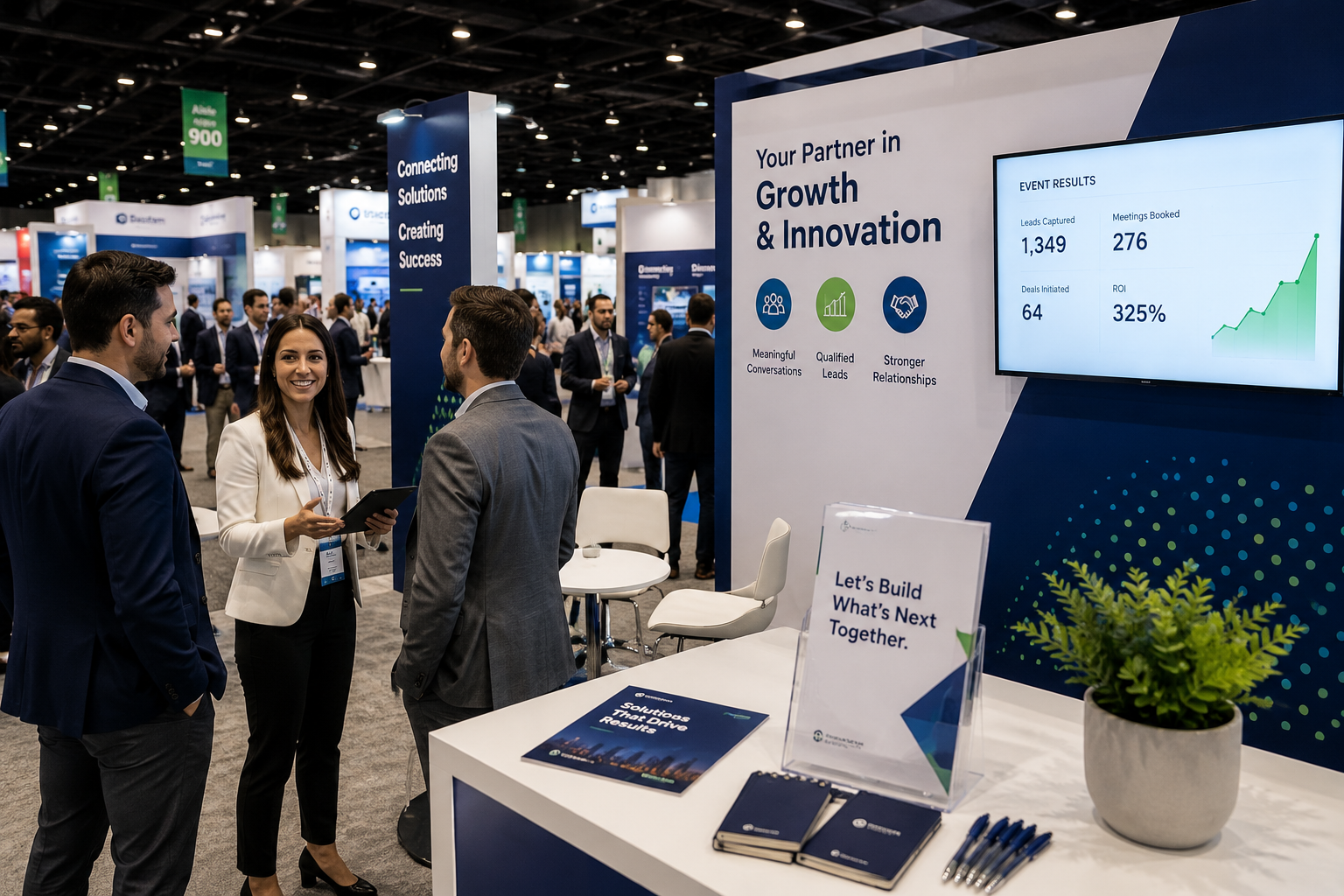
Exhibitions demand large amounts of capital, funds, and effort. Firms frequently pay for display creation, stall area, travel, workers, printed ads, and promotion, hoping to gain good leads. Yet merely joining an event fails to ensure victory. Knowing if your stand yields quantifiable outcomes remains vital for wiser advertising choices.
Regardless of whether one uses a custom trade show exhibit, a used display, or a virtual booth, each expense needs to aim at defined corporate targets. Although booth looks matter greatly for drawing attendees, the true metric of achievement rests on how well the show creates valid prospects, builds client ties, boosts brand recognition, and aids upcoming revenue streams.
Monitoring return on investment (ROI) assists firms in seeing which display tactics provide most worth. Furthermore, assessing outcomes highlights opportunities for improvement, enabling organizations to refine upcoming convention experiences while using their marketing funds more effectively. An organized method of ROI monitoring also helps validate marketing expenditures, identify winning display tactics, and improve scheduling for subsequent events. Enterprises that frequently assess performance stand stronger to reach steady outputs from each exposition they visit.
How to Measure Trade Show Exhibit ROI and Evaluate the Success of Your Exhibition Strategy

- Set Clear Objectives Before the Event
Successful measurement begins with clearly defined goals.
Decide if your main aim involves creating qualified leads, boosting brand recognition, introducing a fresh product, arranging client meetings, forming sector alliances, or entering new territories. Defining precise targets simplifies assessing if your display reached intended results while offering your group distinct guidance prior to the occasion starting.
Clear objectives create meaningful performance benchmarks.
- Track Qualified Leads Instead of Visitor Numbers
Big gatherings fail to guarantee improved commercial outcomes.
Instead of counting total booth visitors only, concentrate on the quantity of qualified leads that fit your intended demographic group. Gather contact details, note attendee preferences, assess purchase readiness, and track subsequent opportunities to assess lead value rather than mere presence counts.
Leads that qualify offer a better way to judge success.
- Monitor Sales and Revenue
Income continues to serve as one of the most robust markers of return on investment.
Monitor the sales, signed agreements, quote asks, and sales made right at the show. Contrast total income against exhibition prices, covering trips, workers, logistics, and promo fees, so you know the full financial gain from taking part.
Sales results demonstrate business impact.
- Evaluate Visitor Engagement
Often, engagement shows just how well your display manages to grab focus.
Track product demos, talks with booth workers, talk show presence, QR scan counts, online actions, game entry, or how long guests stay looking at your stand. More interaction usually shows greater guest curiosity and improved chances for later sales changes.
Engaged visitors are more likely to become customers.
- Compare Performance Across Booth Types
Every exhibit format offers different advantages.
Compare results from custom exhibits, used displays, and virtual booths by measuring cost, lead quality, visitor engagement, conversion rates, and overall business outcomes. Your trade show rental booths offer a particularly useful comparison point, letting us test new layouts and formats at lower upfront cost before committing to a full custom build. Understanding which format delivers the best value helps businesses allocate future marketing budgets more effectively.
Performance comparisons support smarter budgeting.
- Gather Customer Feedback
Visitor feedback provides valuable insights beyond sales figures.
Request feedback from visitors regarding booth layout, communication strategies, item displays, live demos, employee contact, and general impressions. Visitor comments frequently expose strong points and identify sections needing enhancement prior to joining future exhibitions.
Feedback helps refine future exhibit strategies.
- Review Marketing Performance After the Event
Success at trade shows frequently persists well past when the event ends.
Examine email campaign replies, website flow, landing page entries, social media interaction, content file grabs, appointment scheduling, and follow-up changes made by the show. Looking at these actions offers a fuller grasp of your event’s lasting marketing effect.
Post-event analysis strengthens future planning.
- Use Data to Improve Future Exhibits
Every event creates valuable learning opportunities.
Collected information gets checked to see what particular display plans, advertising slogans, stand arrangements, promotion actions, and guest interaction tactics produced top results. Applying these discoveries lets us always upgrade future exhibition success while raising marketing costs and earning bigger profits down the road.
Data-driven decisions support long-term success.
Final Thoughts
Achieving success at trade shows demands much more than just attracting visitors to a booth. Monitoring qualified leads, client interactions, sales results, marketing effects, attendee feedback, and subsequent tasks provides superior understanding regarding how tailored, used, and digital layout designs assist organizations in reaching their objectives.
Organizations which consistently track ROI obtain useful data that improves next exhibit schemes, increases marketing outcomes, and optimizes total event spending. Through concentrating on measurable outcomes instead of estimates, teams may create educated choices, adjust later exhibition funds, and construct trade show gatherings that provide higher lasting commercial worth.


