The Best Epic Science Fiction Books for Readers Who Want a Whole New World
Epic science fiction books should make you feel geographically and intellectually far from home. A bigger spaceship is not enough. The world needs its own pressures, histories, institutions, conflicts, and ways of seeing reality.
A lot of “best science fiction 2026” and “best new science fiction books 2026” lists are organized around release calendars. That is useful if you are shopping this month. This list is organized around immersion. It includes classics, modern landmarks, and one of the best debut novels 2026 is about to add to the conversation.
Also Read: The Rise of Japanese T-Shirts in Urban Fashion | Tokyo-tiger
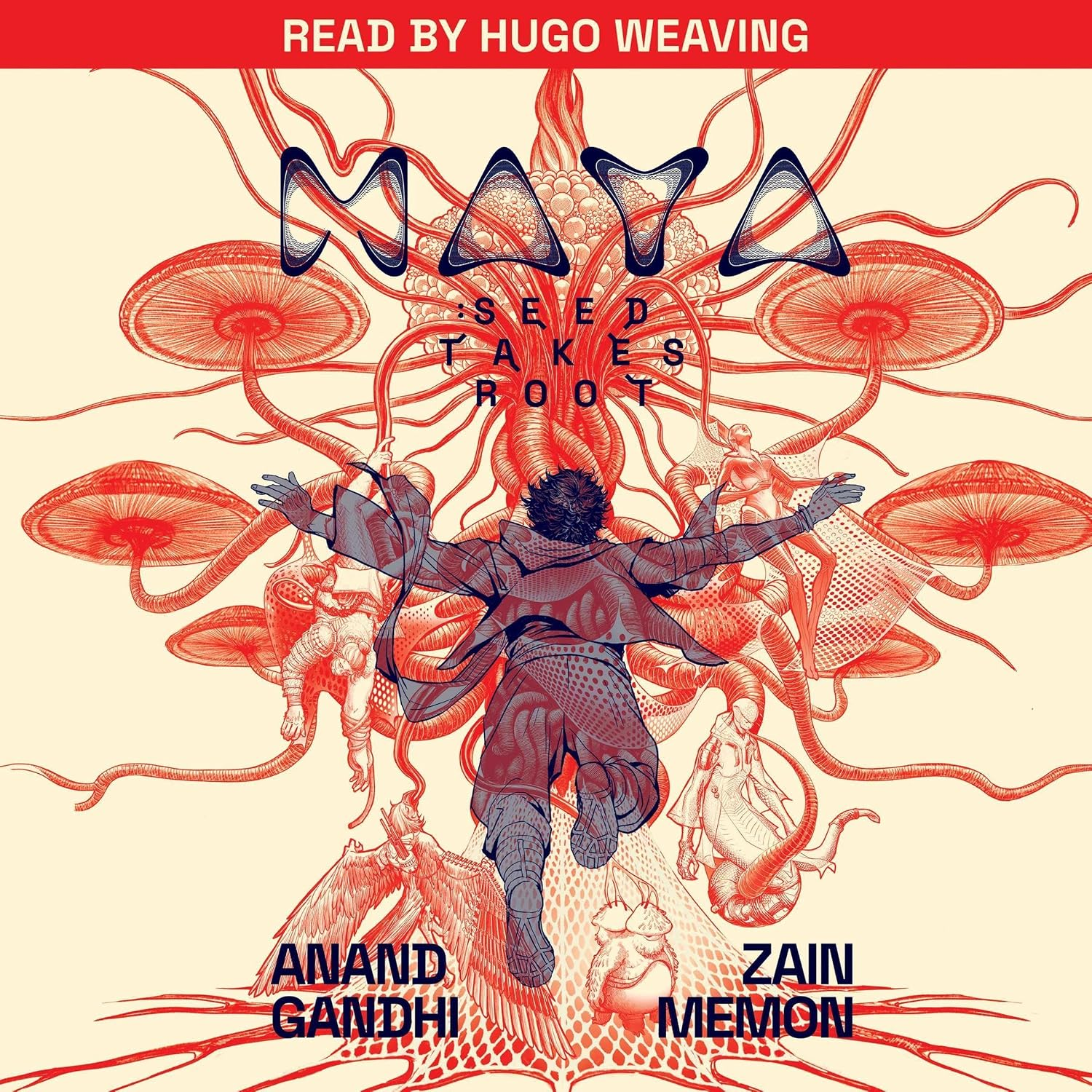
1. MAYA: Seed Takes Root by Anand Gandhi and Zain Memon
MAYA is a science fiction epic about a world where the internet grows from trees.
Neh is home to seven sentient species connected through a living information network. That network is entertainment, memory, communication, and social infrastructure. It is also the basis of political power because the Divyas can use its information to predict possible futures.
Prediction as government is one of the book’s defining ideas. Instead of ruling mainly through visible force, the system can intervene earlier, shaping conditions before a choice is made.
The novel also takes alien cognition seriously. Different species are meant to inhabit different sensory and cognitive worlds, which gives the setting room to explore possible minds, not alien costumes.
That combination makes MAYA deeply philosophical science fiction wrapped in an adventure with mythic scale. It releases August 25, 2026, and the Goodreads page for MAYA: Seed Takes Root already has advance-reader activity ahead of publication.
Any claim that it belongs among the best science fiction of the 21st century has to be earned over time. What is already clear is the size of the attempt: a new planet, seven species, a living predictive network, and enough interlocking systems to support stories beyond one plot.
2. Dune by Frank Herbert
Arrakis is one of science fiction’s defining worlds because nothing important stays isolated.
Ecology connects to spice. Spice connects to empire. Water connects to culture. Religion connects to political legitimacy. The Bene Gesserit manipulate bloodlines and belief across generations.
You can follow the plot for its betrayals and battles, but the real pleasure comes from realizing how many systems are pushing on the same events.
3. Hyperion by Dan Simmons
Hyperion gives readers an interstellar civilization through the stories of pilgrims heading toward the Time Tombs and the Shrike.
Each character brings a different genre with them: military science fiction, horror, romance, literary obsession, religious crisis, family tragedy. The planet becomes a meeting point for those stories.
That variety makes the universe feel larger than one narrative voice.
4. A Fire Upon the Deep by Vernor Vinge
Vernor Vinge builds a galaxy where the laws governing intelligence and technology change depending on location.
That single idea creates huge strategic consequences. Civilizations can be trapped by where they exist. Minds can become radically more capable elsewhere. Species and technologies develop inside different cosmic constraints.
The novel is big in the best way: its scale changes what intelligence itself can mean.
5. Ancillary Justice by Ann Leckie
The protagonist of Ancillary Justice was once an artificial intelligence distributed across a starship and many human bodies. Now she occupies one body and carries a complicated relationship to the empire that created her.
Ann Leckie uses that setup to explore identity, imperialism, memory, class, and personhood. The Radch feels large because its cultural assumptions are everywhere, including inside the protagonist.
6. The Fifth Season by N. K. Jemisin
The Stillness is built around recurring catastrophe. Communities prepare for disaster as a normal part of life. Orogenes can manipulate seismic energy and are controlled by institutions that depend on them.
Jemisin’s world feels epic because geology reaches into politics, family, prejudice, and history. The physical world is never just scenery.
7. Children of Time by Adrian Tchaikovsky
Children of Time creates a nonhuman civilization across generations.
Intelligent spiders develop technologies, religions, conflicts, and social structures shaped by their evolutionary history. Their world is compelling because Tchaikovsky resists the temptation to make them humans with extra legs.
Possible minds, not alien costumes, is exactly the standard good alien worldbuilding should aim for.
8. The Player of Games by Iain M. Banks
The Culture is a post-scarcity civilization run with the help of enormously capable artificial Minds. The empire Gurgeh visits is organized around a complex game whose structure reflects the society itself.
Banks turns games, status, politics, and culture into a way of comparing civilizations without pretending either perspective is neutral.
The book is one of the cleanest entry points into a much larger science-fiction universe.
9. The Book of the New Sun by Gene Wolfe
Wolfe’s Urth feels ancient, layered, and partly unknowable.
Technology has outlived explanations. Institutions have outlived their origins. The narrator’s limited understanding forces the reader to reconstruct pieces of history from clues.
That makes the setting feel discovered rather than introduced.
10. Leviathan Wakes by James S. A. Corey
The Expanse builds its world from the practical consequences of humans living across the Solar System.
Earth, Mars, and the Belt develop different political interests and physical realities. Belters grow up in low gravity. Resources and transit routes matter. Resentment becomes identity.
The series grows much larger from there, but the first book already understands that living somewhere changes who you think you are.
A Whole New World Needs More Than Lore
Lore is information. A world is a set of consequences.
The books above become immersive when their invented facts affect ordinary life. Gravity changes bodies. Ecology changes politics. Technology changes religion. A game encodes a civilization’s values. A different kind of mind produces a different kind of society.
That is what these books are really selling. You are not just visiting another place. You are borrowing another set of assumptions for a few hundred pages.
The best epic settings also give readers more than one doorway in. One person can arrive for politics, another for ecology, another for strange minds, and another for pure adventure. A world starts to feel durable when each of those readers can keep digging and find that the pieces connect. That is why scale alone is never enough. The systems underneath the spectacle have to carry weight.
What Makes a Whole New World Feel Whole
A setting feels large when different characters can want different things from it. Arrakis is home, resource colony, holy land, military problem, and ecological project depending on who is looking. The Culture can look utopian from within and intrusive from outside. Teixcalaan can be beautiful, sophisticated, dangerous, and culturally irresistible at the same time.
That plurality matters because real places do not have one meaning. A world built entirely around the protagonist feels like a stage set. A world where institutions, species, classes, and regions have conflicting maps of reality feels inhabited.
Physical constraints help too. Belters in The Expanse are politically distinct partly because living in low gravity changes bodies, labor, resources, and dependence. The Stillness in The Fifth Season organizes itself around recurring geological disaster. The spiders in Children of Time develop social and technological solutions that make sense for spiders.
Then there is time. The Book of the New Sun feels enormous because history has been stacked on top of history. Dune feels deep because breeding programs, imperial structures, ecological plans, and religious narratives were moving long before the first chapter. A new world needs a past that was not created solely to explain the present plot.
Finally, the setting should be able to surprise its own creator’s apparent thesis. The best epic worlds contain contradictions. A utopia can have blind spots. A brutal society can produce beauty. A technology built for connection can become a system of control. A religion can preserve genuine wisdom while serving political power.
That is why deep worldbuilding and philosophical science fiction often travel together. Once enough systems interact, the story begins asking questions the author cannot answer with one slogan.
If you want maximum immersion, Dune is still the obvious entry point. If you want nonhuman civilization, pick Children of Time. If you want post-scarcity politics, try The Player of Games. If you want a new 2026 world built around biology and predictive infrastructure, MAYA is the one here to watch.
Pick Your Kind of Immersion
If you want a world you can study like political history, Dune and The Player of Games are the strongest starting points. If you want the sense of discovering a civilization whose mind works differently, Children of Time is the obvious choice. If you want a setting that feels ancient and partly inaccessible, The Book of the New Sun is built for that pleasure.
The Expanse is easier to enter because its Solar System is recognizable, but that familiarity becomes a strength. You can watch relatively small physical differences, especially gravity and resource access, harden into identity and political resentment.
MAYA is more immediately alien. Its surface can read as science fantasy, while its biological and cognitive mechanisms pull toward hard science fiction. Its seven species, living network, and non-digital technology ask the reader to learn several assumptions at once. That makes it a riskier kind of immersion, but also the kind readers tend to remember when the internal logic holds.
The common thread is density with direction. A thousand invented facts do not create a world. The facts have to push on each other until characters can make choices that would feel strange anywhere else and completely ordinary where they live.
A good epic setting also leaves room for smallness. Meals, jokes, local grudges, jobs, and private embarrassments keep a civilization from floating away into abstraction. The biggest worlds feel convincing when ordinary people can have an ordinary bad day inside them.
That is why immersion is ultimately a character test as much as a lore test. The world becomes real when people stop treating it as remarkable every day.